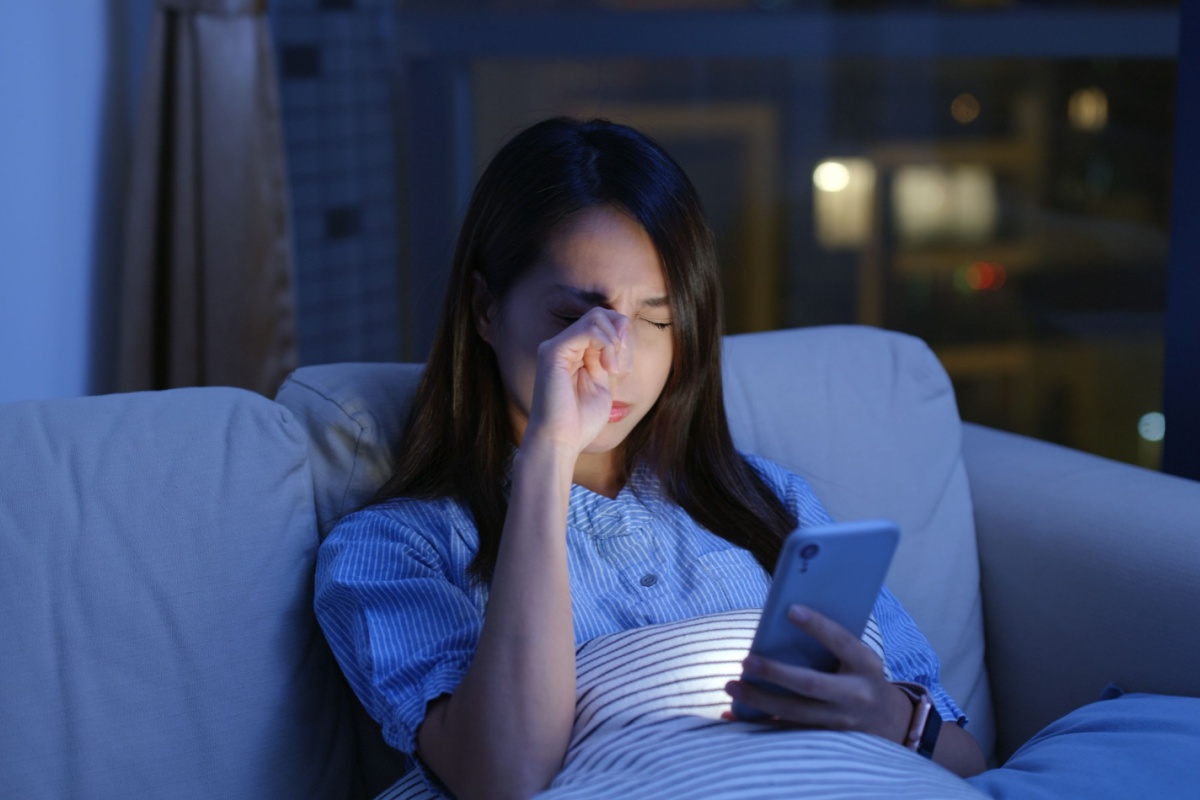
Let’s say your eyes feel fine during the day, but as evening approaches, that familiar burning, gritty sensation creeps in. Your eyes feel dry, tired, and uncomfortable right when you want to relax and unwind. Why is this happening?
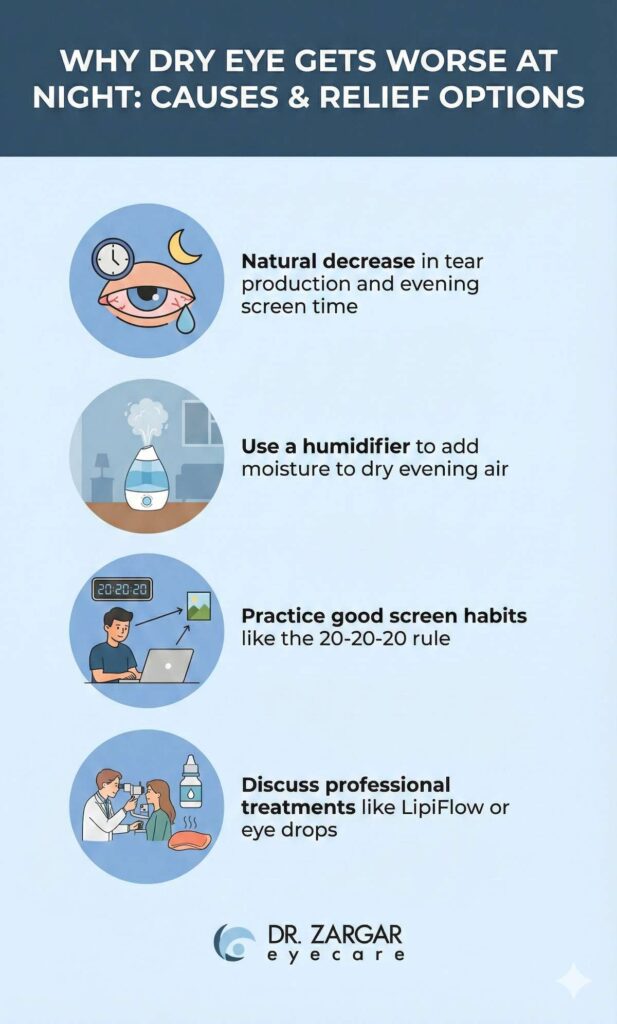
Nighttime dry eye happens because your tear production naturally decreases as the day progresses, while evening activities like screen time and exposure to dry indoor air make the problem worse. The good news is that our team at Dr. Zargar Eyecare offers effective solutions, and you can take simple steps to find relief and protect your eye comfort with proper dry eye therapy.
What Happens to Your Eyes During Evening Hours
Your body follows a natural rhythm in tear production. Throughout the day, your tear glands gradually produce fewer tears, leaving your eyes with less moisture and making them less comfortable. By evening, this reduced tear production becomes noticeable.
When you’re tired, you also tend to blink less frequently without realizing it. Each blink spreads a fresh layer of tears across your eye surface, so fewer blinks mean less moisture distribution. Your eyes literally dry out between blinks.
Your hormone levels also shift as bedtime approaches. These changes can affect the quality of your tears, making them less effective at keeping your eyes moist and comfortable, even if the quantity seems normal. These changes are often small, but they can compound and cause irritation.
Common Evening Activities That Make Dry Eye Worse
Modern life has left us with some bad evening habits that can take a toll on eye health. Here are a couple of the most common activities:
Screen Time and Digital Device Use
When you watch TV or scroll through your phone, your blink rate drops dramatically. You might blink 60% less while focusing on a screen compared to normal conversation. This means your eyes go longer periods without the moisture refresh they need.
Looking at screens also requires intense focus, especially for close-up tasks like reading on your phone. This sustained focus places additional strain on your eye muscles and can worsen dry eye symptoms.
Environmental Factors in Your Home
Your heating system pulls moisture from the air, creating a dry environment that makes your tears evaporate faster. Even if you don’t feel hot, the reduced humidity affects your eye comfort.
Air conditioning has a similar effect during warmer months. The cool, processed air contains less moisture than outdoor air, leaving your eyes working harder to stay hydrated.
Ceiling fans and other air circulation devices create airflow that speeds up tear evaporation. Sitting directly in the path of moving air can make dry eye symptoms much worse within minutes. Using a Bruder-type eye mask warm compress can help counteract some of these effects.
Medical Reasons Your Dry Eye Symptoms Get Worse at Night
Many common medications affect tear production, and these effects often become more noticeable in the evening. Antihistamines, blood pressure medications, and antidepressants can all reduce the amount or quality of tears your eyes produce.
As you age, your tear glands naturally become less efficient. This change is gradual, but you might notice it most during evening hours when your eyes have been working hard all day.
Your meibomian glands produce the oil layer that prevents your tears from evaporating too quickly. When these glands don’t work properly, your tears evaporate faster, and this problem becomes more apparent as the day goes on and your eyes accumulate strain. Professional treatments like LipiFlow therapy can help restore proper gland function.
Hormonal changes throughout the day, including those driven by your circadian rhythm, can affect tear quality and production. These fluctuations are normal but may make your eyes feel less comfortable as evening approaches.
Simple Relief Strategies You Can Try Tonight
Adding a humidifier to your bedroom or living space puts moisture back into the air. You can also turn down your heating or adjust your air conditioning settings slightly. Even small changes in temperature can help preserve the natural moisture in your environment.
Move your chair or couch away from direct airflow. Position yourself so that ceiling fans, heating vents, or air conditioning units aren’t blowing directly on your face.
Follow the 20-20-20 rule when using screens: every 20 minutes, look at something 20 feet away for 20 seconds. This simple break helps reset your blink rate and gives your eyes a moisture refresh. You can also practice deliberate blinking exercises during screen time. Make a conscious effort to blink fully and slowly several times every few minutes.
Use preservative-free artificial tears about 30 minutes before bedtime. These drops supplement your natural tear production without the irritating preservatives found in some eye drops.
Apply a warm compress to your closed eyelids for 5-10 minutes. The gentle heat helps your meibomian glands release oils that improve your tear quality.
When to Seek Professional Help
If your dry eye symptoms persist despite trying home remedies, or if you experience pain, significant redness, or vision changes, it’s time to schedule an eye exam. These signs suggest your dry eye might need professional treatment.
An optometrist can identify underlying issues that you can’t detect on your own. This could include finding problems with your tear glands, oil production, or other factors contributing to your symptoms.
Professional treatment options include:
- RF (radiofrequency) treatment
- IPL (intense pulsed light) therapy
- Celluma LED therapy
- Lipiflow
- ümay.rest therapy
- Punctal plugs
- Prescription eye drops
- Nutritional supplements
- Moist heat compresses (e.g. Bruder-type eye mask)
- AlumierMD Skincare Products
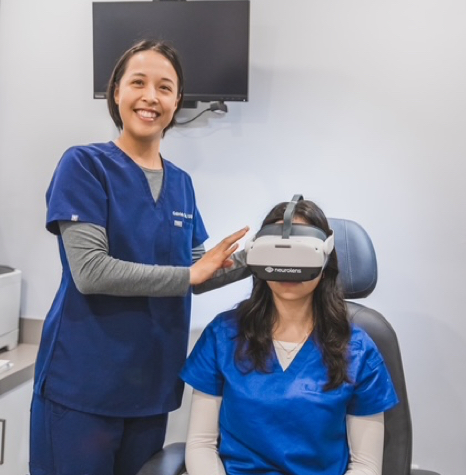
During a comprehensive dry eye evaluation, the doctor can measure your tear production, examine your eyelids and glands, and create a personalized treatment plan that targets the root causes of dry eye rather than just managing symptoms. Professional dry eye treatment can provide lasting relief when home remedies aren’t enough.
Enjoy Your Nights Again
Nighttime dry eye doesn’t have to disrupt your evening comfort. Dr. Zargar Eyecare offers comprehensive dry eye treatment options tailored to your specific needs.
Contact us today to schedule an evaluation and discover personalized solutions that can help you enjoy comfortable vision from morning until night.