Key Takeaways
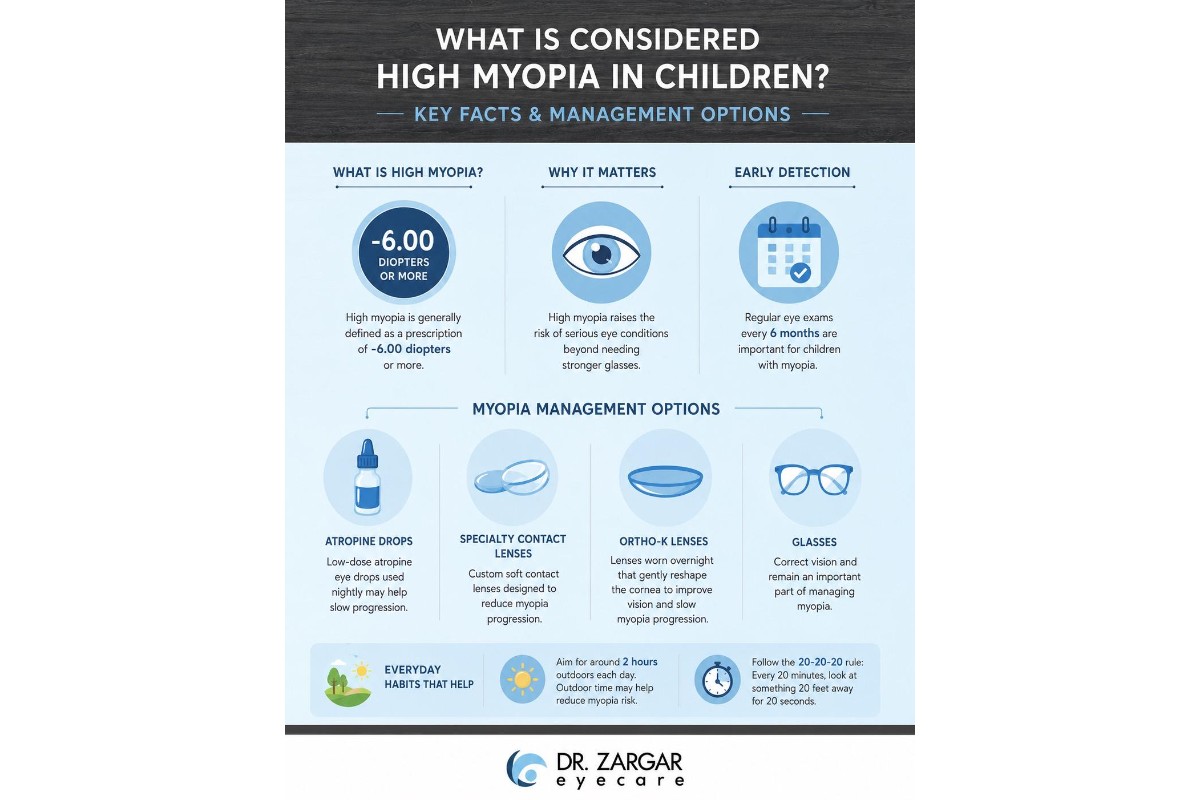
- High myopia is generally defined as a prescription of -6.00 diopters or more.
- Children with myopia often don’t report vision changes because blurriness feels normal to them.
- High myopia raises the risk of serious eye conditions beyond needing stronger glasses.
- Myopia management options can help slow progression, not just correct current vision.
- Regular eye exams every 6 months are important for children with myopia.
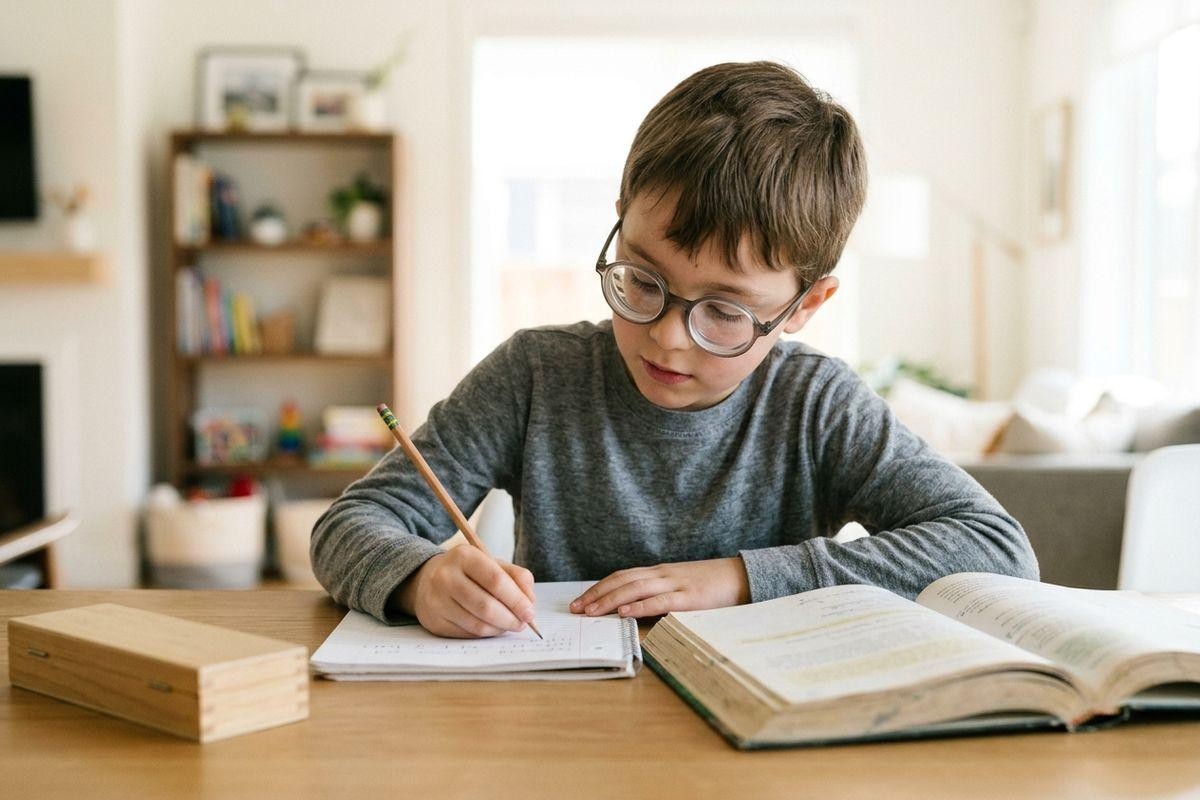
Your child squints at the whiteboard. They hold their tablet closer than you’d expect. Maybe their glasses prescription has jumped again at their last check-up. These moments can feel like small inconveniences, but they may be pointing to something worth paying closer attention to. Dr. Zargar Eyecare works with families in Richmond Hill to catch these changes early and put a plan in place before myopia climbs further.
High myopia in children is typically defined as a prescription of -6.00 diopters or more, and it carries risks that can go beyond needing thicker lenses. Knowing where your child falls on the myopia scale, and what to do about it, can make a real difference in their long-term eye health.
The Myopia Scale: Where Does “High” Begin?
Not all nearsightedness is the same. Prescriptions are measured in diopters, and the number tells you how much correction your child’s eyes need to see clearly at a distance. Here’s how the scale breaks down:
- Low myopia: under -3.00 diopters
- Moderate myopia: -3.00 to -6.00 diopters
- High myopia: -6.00 diopters or more
What -5.00 vs. -6.00 Actually Means
Some clinicians use -5.00 diopters as the starting point for high myopia, while others use -6.00. That one diopter difference isn’t just a number on a chart. A higher prescription reflects more eyeball growth, which matters for reasons beyond blurry vision. The prescription gives a snapshot, but it doesn’t capture the full picture of what’s happening inside the eye. Research projecting global myopia prevalence rising to 52% by 2050 puts into perspective just how common and serious high myopia is becoming for children today.
Signs Your Child May Have High Myopia
Children don’t always connect their symptoms to their vision. You might notice things they never mention. Watch for:
- Squinting at boards, signs, or screens
- Frequent headaches or eye strain after school
- Holding books or devices very close to their face
Why Kids Don’t Always Speak Up
If your child has never seen clearly at a distance, they may simply think that’s how the world looks for everyone. Vision changes can also creep in gradually, so there’s no obvious moment where something feels “wrong.”
That’s exactly why regular eye exams matter so much. A child won’t always flag a problem that’s been building for months.
At What Age Does High Myopia Typically Start and Stabilize?
Myopia commonly develops between ages 8 and 12, often picked up right around the time kids start spending more hours in classrooms and on screens. Progression tends to accelerate during the teen years, when the body is growing rapidly. For most people, myopia stabilizes somewhere in the mid-to-late 20s.
Early Onset Means Higher Risk
A child diagnosed at age 7 has more growing years ahead than one diagnosed at 13. That longer window often means more diopter increases over time. Family history also plays a role. If one or both parents are myopic, your child is more likely to develop it and potentially progress further.
Acting early doesn’t just help today’s prescription. It can help limit how high that number climbs by the time your child finishes growing.

Why High Myopia Is More Than a Glasses Prescription
Here’s the part many parents don’t hear until much later. When the eye grows too long, the retina at the back stretches to accommodate that length. Over time, this can create real structural risks, including:
- Retinal detachment, which can develop with little warning
- Higher likelihood of glaucoma and cataracts later in life
- A condition called maculopathy, which can affect central vision
Long-Term Eye Health Considerations
The risk for these conditions increases with each additional diopter. A child at -7.00 carries more risk than one at -3.00, even if both see clearly with their current glasses. A review of high myopia complications outlines how axial elongation, the physical lengthening of the eye, is linked to conditions like maculopathy, retinal detachment, and glaucoma over time.
Glasses correct how your child sees right now. They don’t slow down the eye’s growth or reduce the structural changes happening underneath. That’s an important distinction when thinking about long-term care.
How a Richmond Hill Optometrist Can Help Manage It
Treatment Options Your Child May Be Offered
Myopia management is different from a standard prescription update. The goal is to help slow how quickly the eye grows, which can help keep your child’s prescription from climbing as steeply over time. At Dr. Zargar Eyecare, treatment options may include:
- MiSight daily contact lenses
- Stellest eyeglass lenses
- MiYOSMART eyeglass lenses
- Low-dose atropine eye drops
- Orthokeratology, or ortho-k, lenses worn overnight
How Ocumetra Helps Guide the Plan
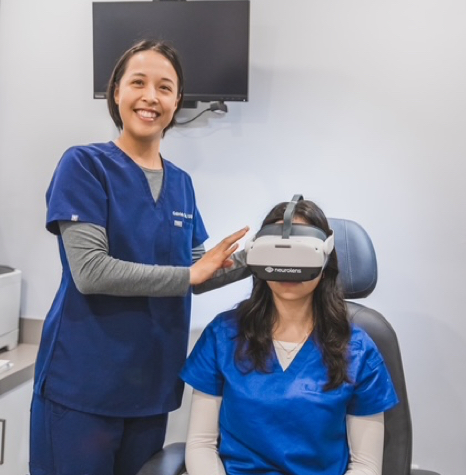
At Dr. Zargar Eyecare, we use Ocumetra for patients 6 years of age and up. This tool helps categorize your child’s myopia risk, estimate how their prescription may change over time, and compare treatment options. We also text parents the results, so you can review the information at home and better understand why a specific management plan is recommended.
We recommend eye exams every 6 months for children with myopia, rather than the standard annual schedule. More frequent monitoring helps catch changes sooner and adjust the management plan when needed. If you’re weighing lens options for your child, this comparison of daily myopia contact lenses and ortho-k lenses can help you understand what each involves.
Everyday Habits That Support Eye Health
What your child does between appointments matters too. Outdoor time is one of the most helpful habits for children with myopia. Aim for around 2 hours outside each day. Natural light and the distance focus that comes with being outdoors both play a role. A research review on outdoor time and myopia risk found strong evidence that bright light exposure reduces myopia risk in children.
For screen time, the 20-20-20 rule is a simple reset. Every 20 minutes, look at something 20 feet away for 20 seconds. Limiting long stretches of near work without any breaks also helps take some strain off developing eyes.
We Can Help
If your child’s prescription has been creeping up, or you haven’t had their eyes checked recently, now is a good time to book an appointment. Our team at Dr. Zargar Eyecare in Richmond Hill works with families to assess where a child’s myopia stands and what options make sense for their specific situation. Reach out today to schedule a comprehensive children’s eye exam.