
Key Takeaways
- Myopia rates have nearly doubled in the last 30 years, and children are being diagnosed younger and with stronger prescriptions.
- Too much close-up work and too little outdoor time are major contributing factors.
- Simple daily habits can help support healthier eye development.
- Early eye exams and myopia management can help slow progression during school-age years.
It is usually the little things you notice first: your child squinting at the TV, or holding a tablet just a few inches from their nose. These quiet moments are often the first signs of a major shift in childhood vision, driven largely by a modern lifestyle of increased screen time and less time playing outdoors in natural light.
Because young eyes are spending so much time focusing on close-up screens instead of distant horizons, myopia (nearsightedness) is arriving much earlier and moving faster than it did a generation ago.
While that trend sounds concerning, it actually gives parents a window of opportunity. Catching these changes early means you can actively help slow the progression down and protect their long-term sight while their eyes are still growing.
At Dr. Zargar Eyecare, we partner with Richmond Hill families to do exactly that. We look closely at those subtle early signs and build a proactive, personalized plan that fits your child’s life, helping their world stay clear, both in the classroom and everywhere else.
Myopia in Children Is on the Rise
Myopia rates have nearly doubled in the last 30 years. Researchers project that by 2050, roughly half of the world’s population will be nearsighted. That’s a significant shift in a relatively short period of time.
Children today aren’t just becoming nearsighted more often. They’re being diagnosed at younger ages and with stronger prescriptions than previous generations. That combination matters because the earlier myopia starts and the faster it progresses, the greater the long-term impact on eye health. High myopia in particular is linked to a higher risk of serious eye health concerns later in life, including retinal complications and glaucoma.
Signs Your Child May Be Nearsighted
What to Watch for at Home
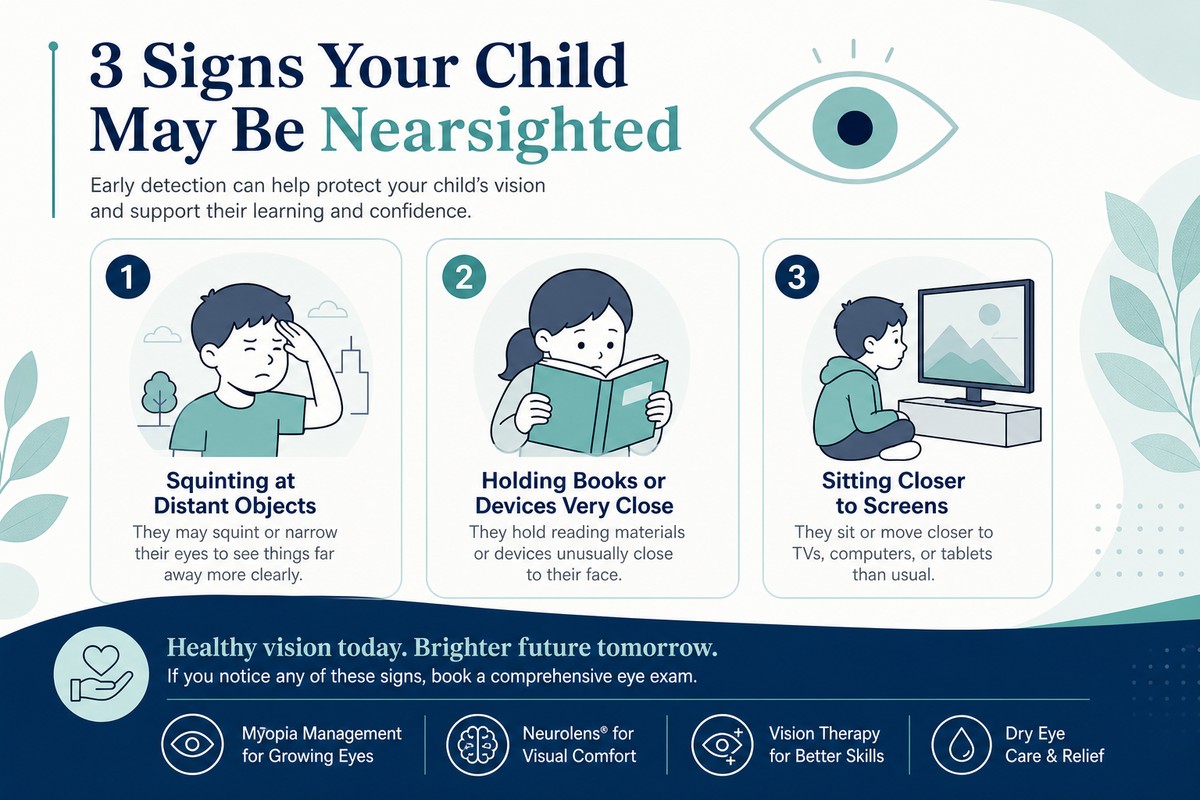
Children rarely complain about vision the way adults do. They adapt. But there are signs you can watch for in everyday life, including:
- Squinting at the TV, whiteboard, or distant objects
- Holding books or devices unusually close to their face
- Mentioning that things look blurry at school
- Sitting closer to the screen than they used to
These habits often seem harmless at first. Over time, they can be your first clue that your child’s vision has changed.
When to See an Optometrist
If you notice any of the signs above, it’s a good time to book an eye exam. You don’t need to wait until something feels urgent. Scheduling a visit at the start of each school year can help catch changes early, before they affect your child’s learning and daily comfort. Comprehensive eye exams for children are recommended annually, and they check far more than just how clearly your child can read a chart.
What Contributes to the Shift
The Role of Family History
If one or both parents are nearsighted, their children face a higher likelihood of developing myopia. That said, genetics alone can’t explain why myopia rates have risen so sharply across entire populations in just a few decades. Lifestyle and environment are clearly part of the picture, too.
Too Much Screen Time and Close-Up Work
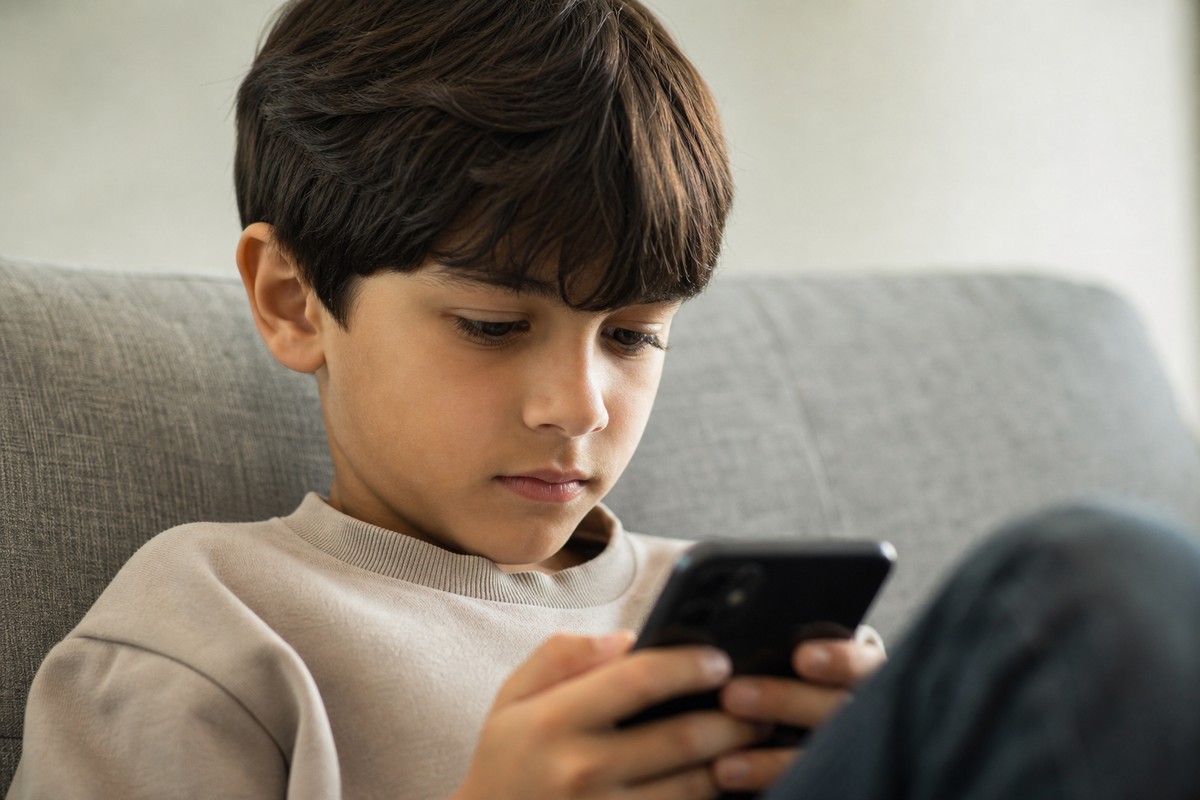
When your child spends hours focusing on something close, whether that’s a tablet, a book, or homework sheets, their eyes stay in a contracted near-focus state for extended stretches. Over time, this type of strain can affect how the eye develops during childhood.
School schedules have shifted, too. More homework, more digital learning tools, and more time in front of screens mean children’s eyes are doing close-up work for a larger portion of their day than ever before.
Less Time Outdoors
Natural light plays a role in healthy eye development. Time spent outside, in daylight, supports the natural regulation of eye growth in children. When kids spend most of their day indoors, that natural balance shifts.
Two hours of outdoor time per day is a commonly recommended target. For many children today, that number is hard to reach between school, homework, and screen time. Research supports bright light exposure as one of the more consistent protective factors against myopia in children, making outdoor time one of the simplest habits to prioritize.
Simple Habits That Support Healthy Vision
You don’t need to overhaul your family’s routine to make a difference. A few consistent habits can help support your child’s eye health during these important developmental years, including:
- Following the 20-20-20 rule by encouraging your child to look at something 20 feet away for 20 seconds every 20 minutes of screen time
- Aiming for at least 2 hours of outdoor time each day, ideally in natural daylight
- Keeping screens and books at a comfortable arm’s-length distance from the face
These small changes won’t fix everything, but they create healthier daily patterns that support your child’s vision over time.
How Myopia Management Can Help
Why Early Action Matters
Myopia tends to progress quickly during the school-age years, roughly between ages 6 and 16. The stronger a prescription gets, the greater the risk of certain eye health concerns later in life. Acting early can give you more options and more time to slow that progression.
What an Optometrist Can Do
At Dr. Zargar Eyecare, our team offers comprehensive eye exams that track how your child’s vision changes over time, not just a snapshot of where things stand today. If myopia is identified, your eye doctor can discuss management options designed to help slow its progression, with a care plan built around your child’s specific situation. Options can include myopia control contact lenses and orthokeratology lenses, depending on your child’s age, lifestyle, and what fits your family best.
Get Can Help at Dr. Zargar Eyecare
If you’ve noticed signs or simply want a clear picture of your child’s vision, reaching out to book an exam at Dr. Zargar Eyecare is a straightforward way to start.